QufitAgro← All evidence
Station field record · separate blocks

The largest field record — treated and control cotton, side by side.

Cotton (M-4011) · Cotton & melon research station · Maktaaral, Kazakhstan · 2022
2.7 → 4.2 t/ha
seed-cotton yield, control block → treated block

Documented at a cotton-and-melon research station in the Maktaaral district of southern Kazakhstan — 81.68 ha of cotton, cv. M-4011, with a treated seed block set against an untreated control and measured through to harvest. Here is how the trial was run (grower walk-throughs below, with English subtitles).

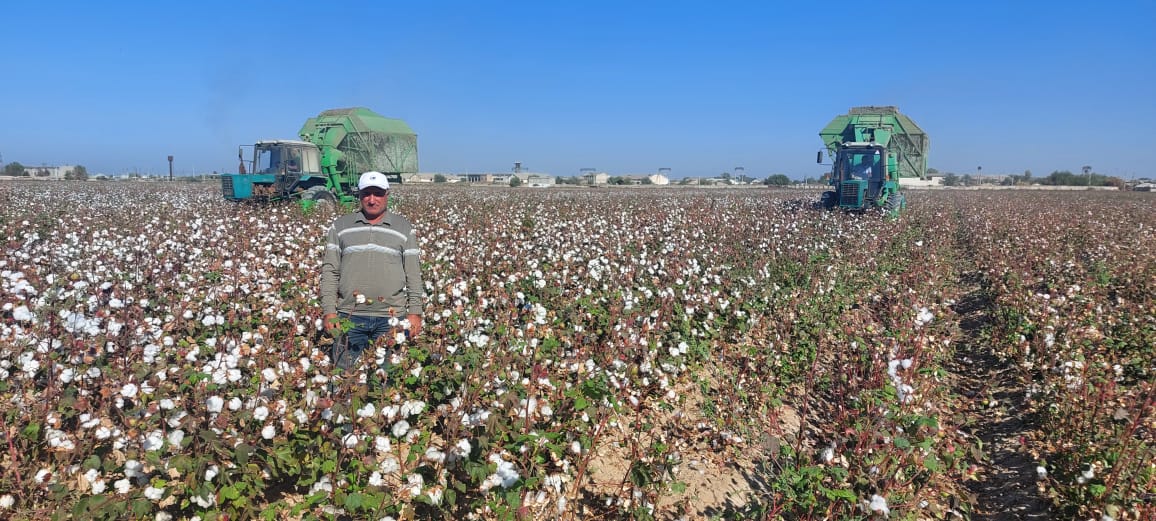
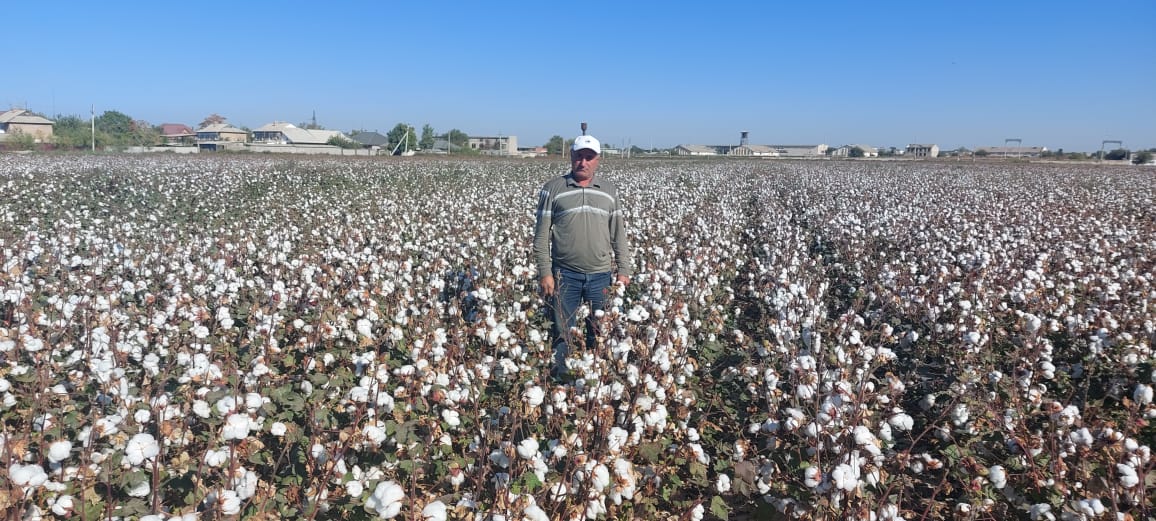
Treated block (56.9 ha, cv. M-4011) at harvest — open bolls top to bottom.
How the trial was run
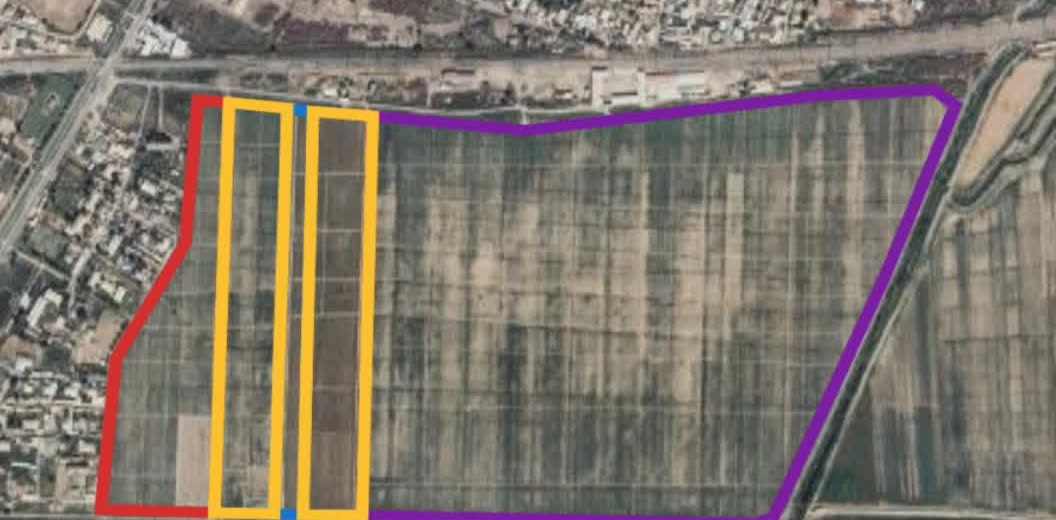
The trial field from above — the blocks laid out and GPS-mapped.
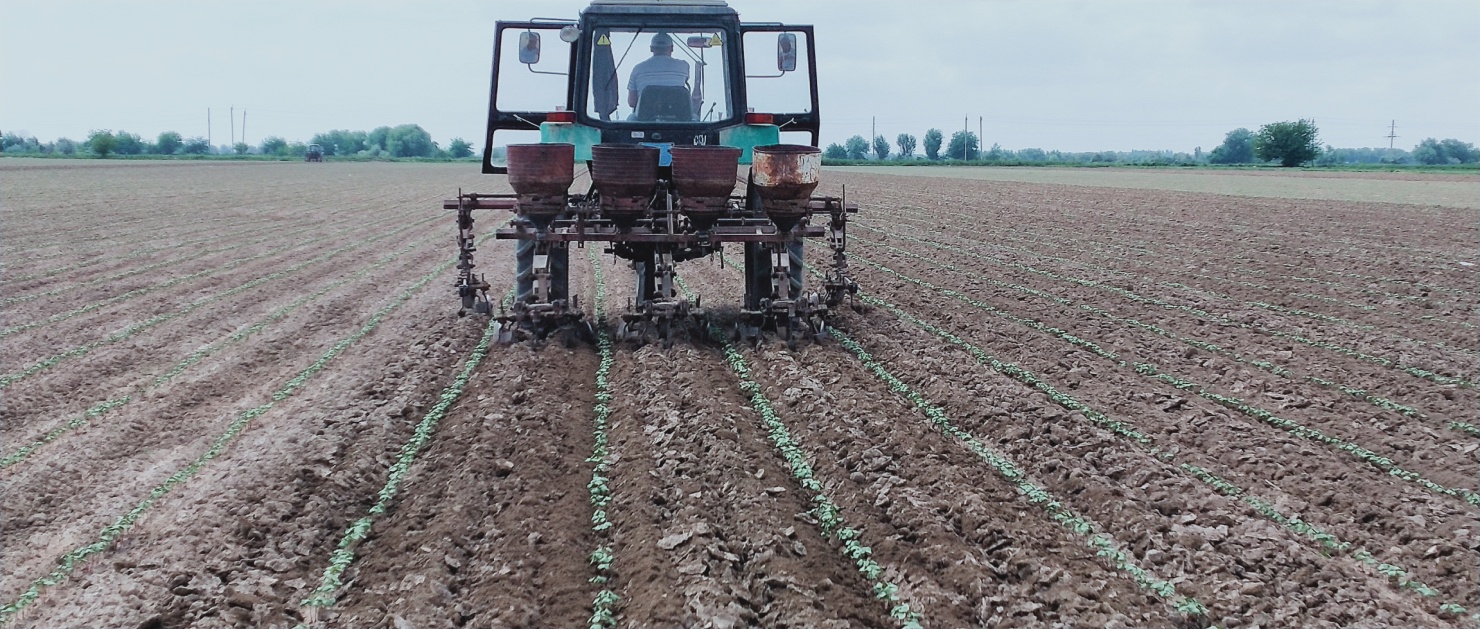
Sowing the trial with a precision seeder.

One field, split in two

The trial ran on 81.68 hectares at a cotton-and-melon research station in the Maktaaral district, on the local variety M-4011. The ground was split into GPS-mapped blocks and farmed identically but for the seed — an 8.4-hectare control sown untreated, and a 56.9-hectare block grown from treated seed — both drilled mid-April with a precision seeder.
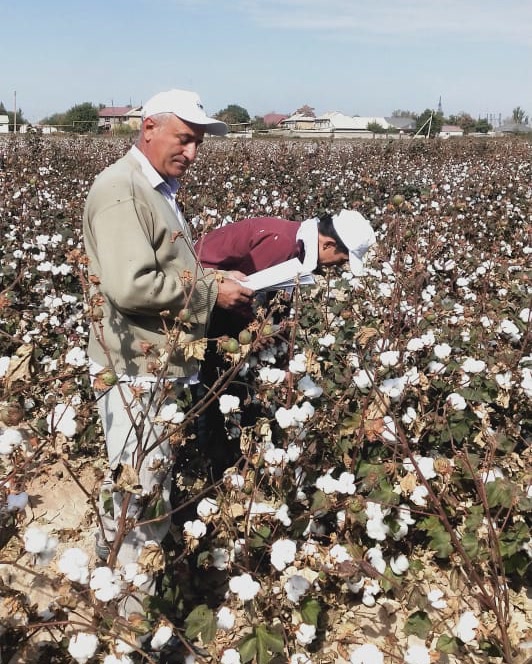
Agronomists scoring boll set and plant structure in the field.

Grown the same, side by side

Both blocks were thinned to 111–122,000 plants per hectare and given the same cultivation, fertiliser and irrigation. Agronomists scored plant structure and boll set on fixed dates through the season. The treated block ran visibly taller, carrying a denser fruit load.

The bolls, measured

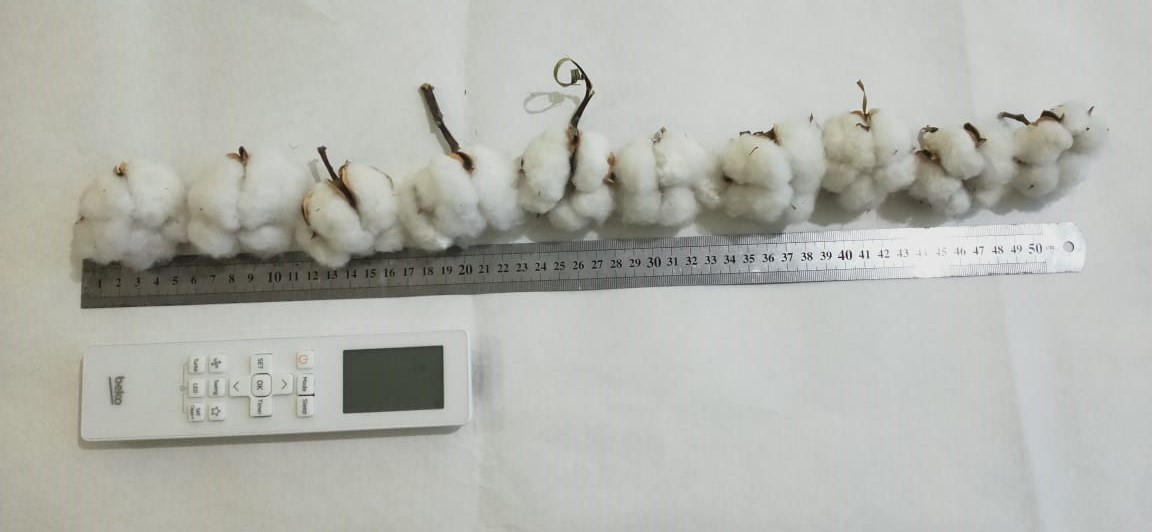
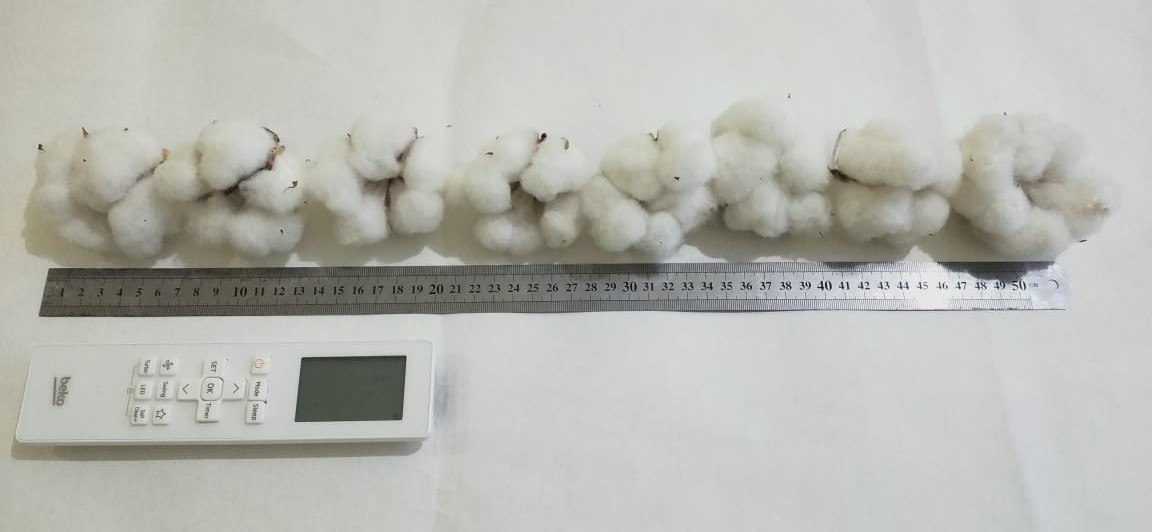
At maturity, bolls from each block were laid out against a 50 cm rule. The treated bolls were larger and fuller — mostly five-locule, averaging 7.1 g — against the untreated control's four-locule bolls at about 6.0 g.

Treated block — larger, five-locule bolls (≈7.1 g).Treated
Treated block — larger, five-locule bolls (≈7.1 g).
Untreated control — smaller, four-locule bolls (≈6.0 g).Control
Untreated control — smaller, four-locule bolls (≈6.0 g).
Harvest under way on the treated block.

Harvest

The crop was picked from late September into October. The treated block returned 4.23 t/ha of seed-cotton against 2.69 t/ha on the control, with higher fibre outturn and slightly longer fibre.

Treated and control, side by side
Control block — standard agronomy: shorter plants, sparser boll set. Grower walk-through with English subtitles.
Treated block — taller plants, dense boll set. Grower walk-through with English subtitles.
Recorded
Seed-cotton yield — treated / control4.23 / 2.69 t/ha
Yield uplift vs control block≈ +57%
Boll weight — treated / control7.1 / 6.0 g
Boll structure — treated / control5-locule / 4-locule
Fibre outturn — treated / controlup to 40.1% / ≤34.6%
Fibre length — treated / controlup to 33.6 / ≤32.6 mm
Treated block / control block56.9 ha / 8.4 ha
Cultivar · regionM-4011 · Maktaaral, Kazakhstan
Nature of this record

Separate blocks (56.9 ha treated vs 8.4 ha control) in a single season — not a randomized, interleaved trial. It was an extreme-heat summer (day temperatures 44–48 °C) that caused some boll shedding across the site. Read it as a large, GPS-mapped field observation, not a controlled result.

Source: Cotton & Melon Research Station (СХОС) · Maktaaral district, Turkestan region, Kazakhstan · 2022

The only number that counts is the one on your field.

Every figure here is a historical, third-party observation — not a guarantee. Run a control strip and let your own ground decide.

Request a pilot →See all evidence