
Against plain water
The study's control was plain water — seed soaked with nothing added, alongside four commercial stimulants. Side by side at 88 hours, the strongest dilution (1:1000) led the water control on every measure the report tracked.
A lab dose-response at Can Tho, Vietnam: OM 4218 rice seed soaked at four dilutions of the treatment and scored against four commercial stimulants and a plain-water control. Here is how the dose landed — and where it went next.
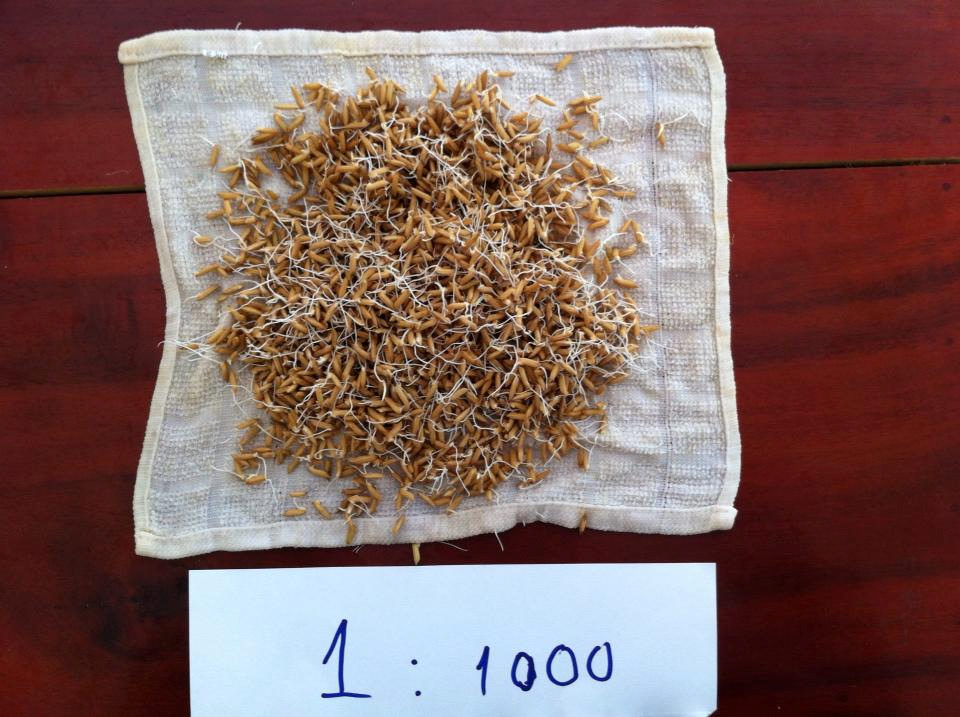
The question was narrow: which dilution of the treatment does rice seed respond to best? At a lab in Can Tho, OM 4218 seed was split into nine lots of 100 grams — four dilutions of the treatment, four commercial seed stimulants, and a plain-water control — then soaked, laid out on cloth, and scored for germination and for root and shoot length at 40, 64 and 88 hours.
Germination held high across the range — 99% at 1:1000, 96% at 1:3000, 98% at 1:5000, and 91% at the thinnest 1:10000. The response wasn't a straight line: 1:1000 and 1:5000 led, with the fall-off only at the thinnest dose.
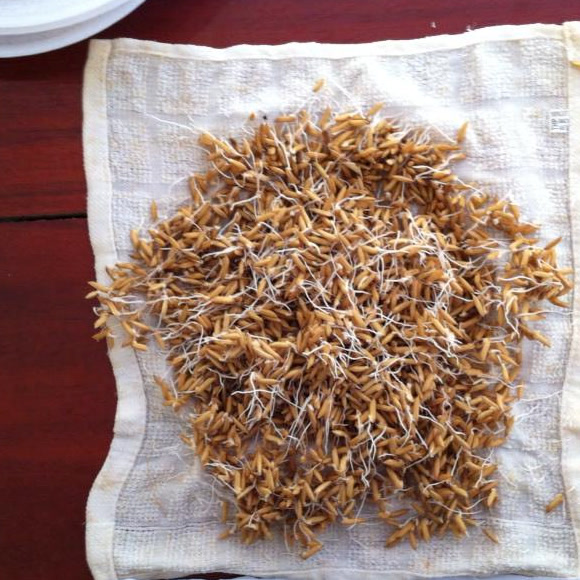 1:3000
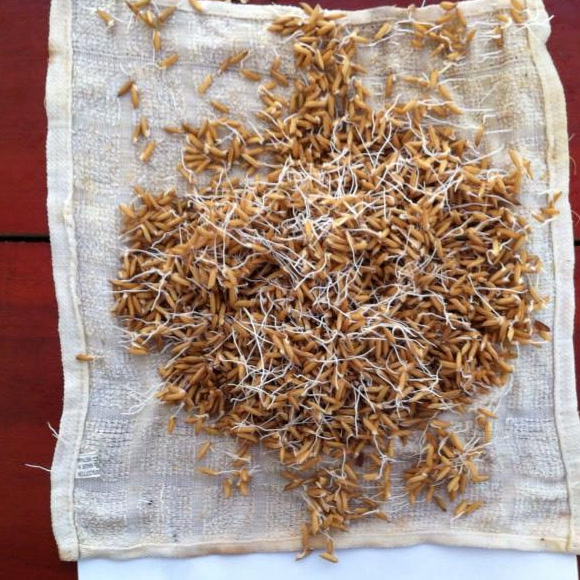 1:5000
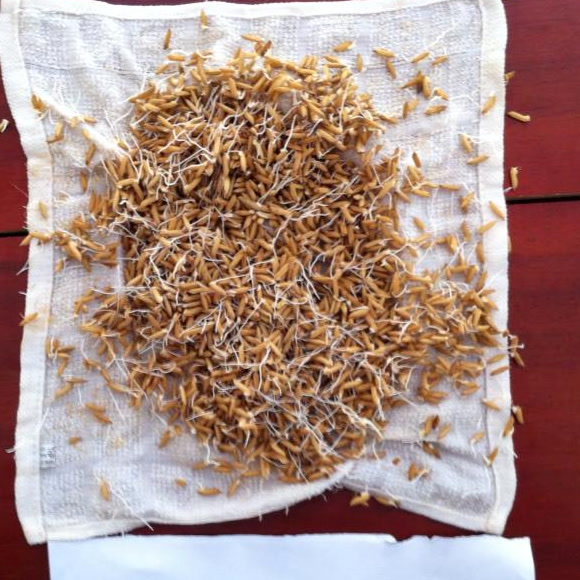 1:10000
The study's control was plain water — seed soaked with nothing added, alongside four commercial stimulants. Side by side at 88 hours, the strongest dilution (1:1000) led the water control on every measure the report tracked.
The lab result recommended taking the best dilutions to open ground — and a later, separate planting at Ninh Binh (2016) did exactly that, comparing treated and untreated rows in the paddy. It is a different trial from the Can Tho lab test above, shown here for context.
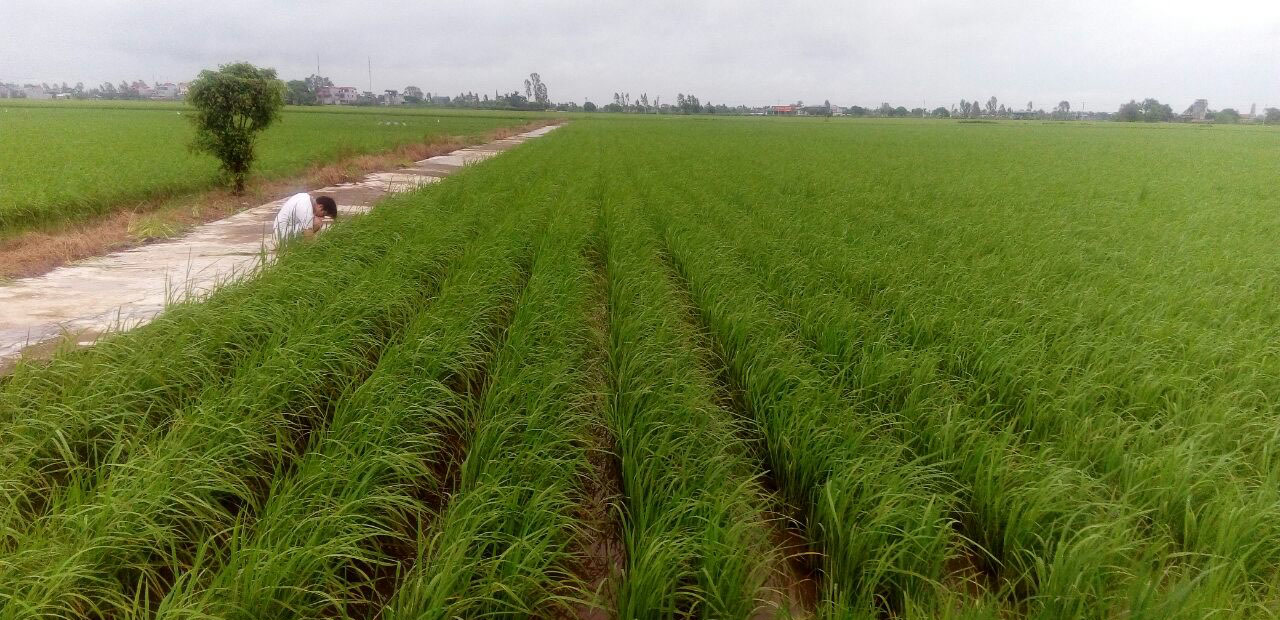 Treated
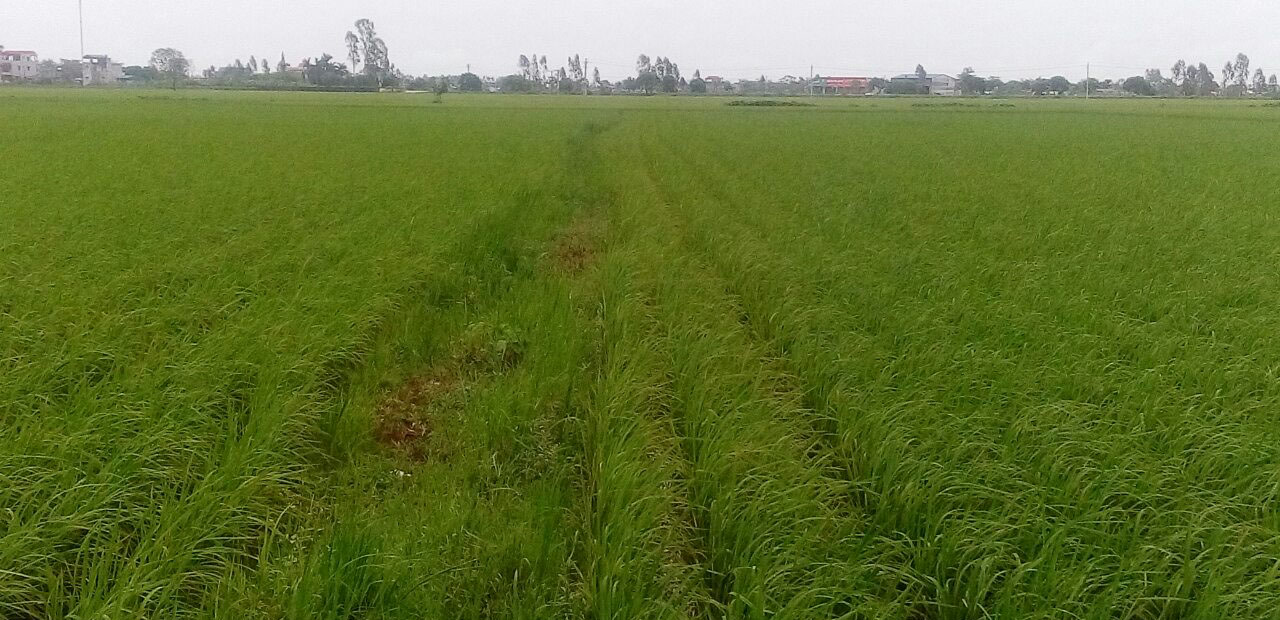 Control
A laboratory germination study, not a field-yield trial — the report itself recommends an open-field follow-up. The dose-response is non-monotonic (1:1000 and 1:5000 scored best), which is worth confirming in the field.
Every figure here is a historical, third-party observation — not a guarantee. Run a control strip and let your own ground decide.